








The recently concluded National Two Sessions have drawn new lines of emphasis for the energy sector. "In-depth rectification of 'involution-style' competition" was written into the agenda, the term "future energy" appeared in the government work report for the first time, and concepts such as "computing-power synergy" and zero-carbon industrial parks became buzzwords. Meanwhile, turbulence in the Middle East and fluctuations in the oil and gas markets have once again sounded the alarm for energy security. These two seemingly parallel threads both point to the same conclusion: photovoltaics can no longer be just about manufacturing; it must become the main force of the new power system. Yingli Energy Development Co., Ltd.'s recent series of moves provides a vivid footnote to this judgment.
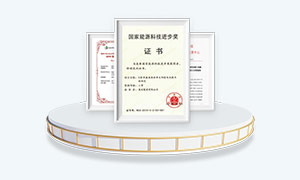
Recently, the China National Intellectual Property Administration announced the new list of candidates for the National Intellectual Property Demonstration Enterprises, and Yingli Energy Development Co., Ltd. was successfully selected. However, the new selection model adopts a "creation first, recognition later" approach, requiring enterprises to pass multi-dimensional assessments of transformation benefits and management levels by the end of 2027. Although Yingli Energy Development Co., Ltd.'s total applications number nearly 2,500, covering core fields such as N-type and perovskite, its strength lies not in piling up patents but in genuinely applying technology to extreme scenarios like plateaus, deserts, and offshore environments.
Another joint recognition from eight provinces and municipalities directly validates the product's robustness. The Shanghai Municipal Administration for Market Regulation and other seven provincial-level administrations announced the 2025 Product Quality and Reliability Innovation Cases. Yingli Energy Development Co., Ltd.'s PANDA 3.0 PRO bifacial module was successfully selected and was the only selected product from the PV industry. Concurrently, two technical experts from the company were included in the expert roster. From extreme cold empirical tests in Mohe to high salt-spray tests along the Italian coast, Yingli Energy Development Co., Ltd.'s PV modules can withstand the "torture" of various extreme environments.
On the international stage, Yingli Energy Development Co., Ltd. is equally active. At the KEY - The Energy Transition Expo in Rimini, Italy, in early March, Yingli Energy Development Co., Ltd. showcased its adaptability verified by extreme environments across the globe. Resistance to PID, corrosion resistance, and low-light performance—every technology has been "honed" in real-world projects. Italy's elongated territory spans multiple climate zones, from the severe cold of the Alps to the salt spray of the Mediterranean, making it a natural "proving ground" for PV products. Leveraging years of empirical data accumulated in plateaus and deserts, Yingli Energy Development Co., Ltd. met these challenges with ease.
Turning attention back to the domestic market, Yingli Energy Development Co., Ltd.'s response to the signals from the Two Sessions is even more concrete. In the Western Sichuan Plateau project, it is supplying modules for the hydro-wind-solar integrated base in the Yalong River Basin; in Gonghe, Qinghai, it supports PV-CSP complementary projects; in Zhangbei, the wind-solar-storage smart PV project provides green electricity for big data centers; projects along the Xiong'an North Expressway Service Area and the Taihang Mountain Expressway have been successively implemented. In February of this year, Yingli Energy Development Co., Ltd. secured wind power quotas in the Chengde City wind-solar project competitive allocation, marking a solid step into the fields of wind-solar integration and comprehensive energy services.
From intellectual property to quality reliability, from international exhibitions to domestic projects, Yingli Energy Development Co., Ltd.'s three cards point in the same direction: no longer chasing short-term price wars, but proving quality with time and navigating cycles with deep scenario cultivation. As the Two Sessions pave the way for "future energy," this company is already on the road.