








Recently, many regions across the country have been hit by this winter’s strongest cold wave, with temperatures plummeting and heavy snowstorms accompanied by strong winds. In Mohe, the historical lowest temperature once dropped to minus 53 degrees Celsius. It was precisely in this frigid region that Yingli Energy Development Co., Ltd.’s Panda modules underwent a year-long “extreme survival test.”
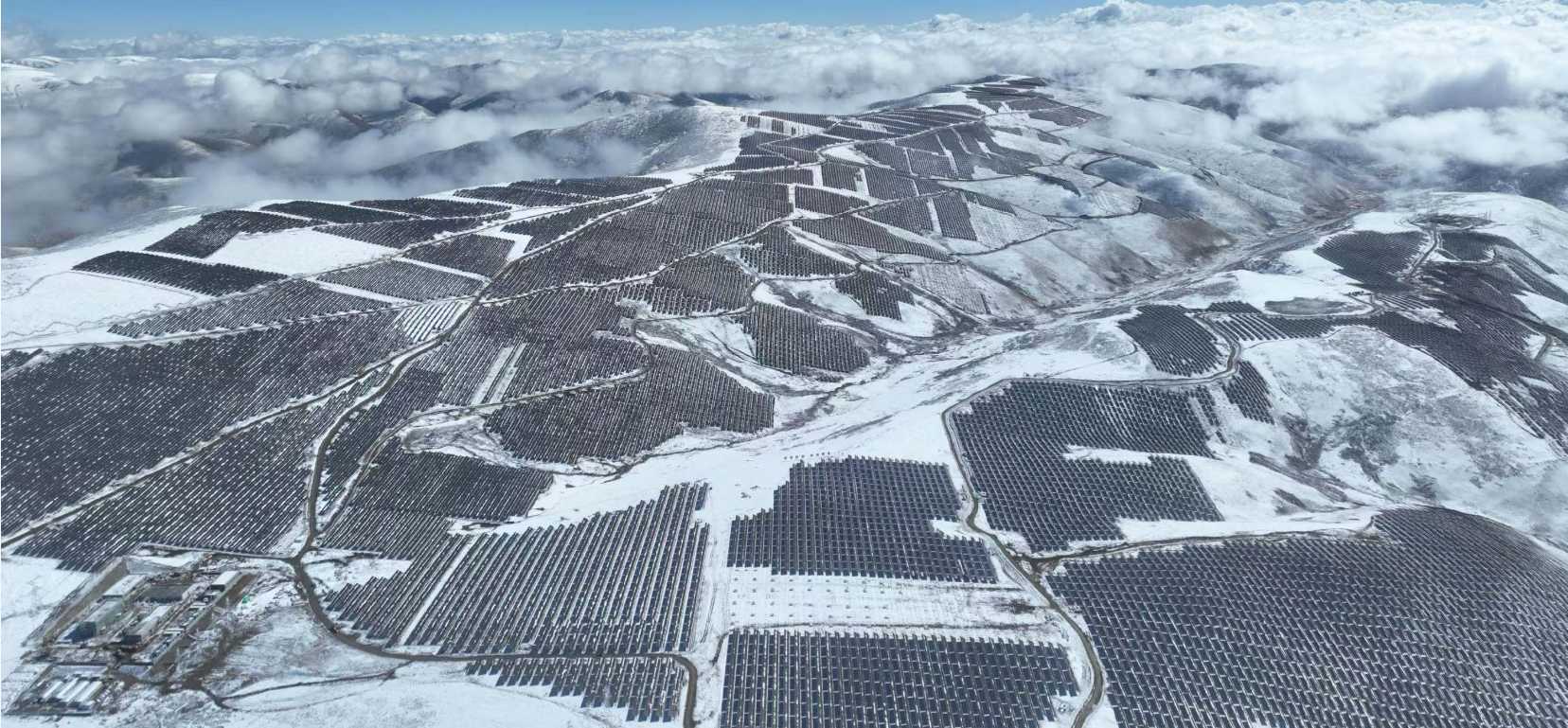

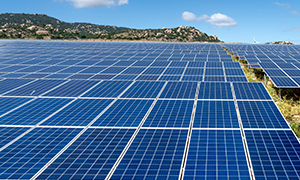
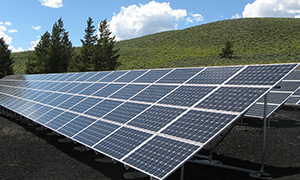
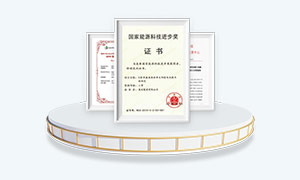
Just what does a photovoltaic module go through to maintain stable power generation even in environments as cold as minus 30 or 40 degrees Celsius? The answer lies in 115 meticulously controlled process checkpoints. Starting from the selection of raw materials, each batch must pass at least five rigorous quality checks, and before entering the factory, it undergoes an additional eight stages of thorough inspection. Once production begins, the highly intelligent manufacturing line operates continuously, with those 115 quality control points acting like vigilant sentinels, firmly safeguarding product quality. But that’s still not enough. After leaving the factory, Panda modules are subjected to static load tests at minus 40 degrees Celsius, TC tests exceeding IEC standards by several times, and non-uniform snow-load tests capable of withstanding the weight of two meters of accumulated snow... Ultimately, they successfully obtain TÜV Rheinland’s certification for non-uniform snow loads, proving they can endure two meters of snowfall and are equipped with wind-tunnel testing capabilities. Test-certified to withstand high wind speeds of up to 62 meters per second. The stringent testing conducted by third-party organizations is even more rigorous—PVEL’s test standards are twice as stringent as those set by IEC. Both TÜV Süd and TÜV Nord have awarded it the enhanced hail resistance certification for 35mm-sized hailstones. With 43 different testing and certification procedures, each certificate represents a monumental challenge in its own right. Theoretical concepts ultimately must return to reality. In Litang, Ganzi, Sichuan, the Suorong photovoltaic power station—situated at an altitude of 4,800 meters—is operating amidst icy winds. The area’s historically recorded lowest temperature can plunge as low as minus 30.6 degrees Celsius, making this station a crucial component of the world’s largest hydropower-solar complementary project. Yingli Energy Development Co., Ltd.’s Panda modules are undergoing relentless tests here—battling blizzards, intense ultraviolet radiation, and extreme temperature fluctuations—but have achieved a 100% pass rate in incoming inspection, becoming the first among all suppliers to complete delivery ahead of schedule.
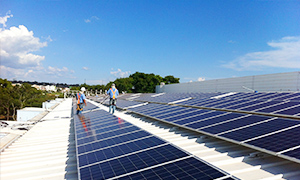
In Alar, Xinjiang, freezing temperatures as low as minus 28 degrees Celsius haven't hindered the operation of the power station; in Ordos, Inner Mongolia, amid frigid winds dropping to minus 30 degrees Celsius, a 431-megawatt photovoltaic project continues to stably generate green electricity; and at the project site in Shigatse, Tibet, situated at an altitude of 4,000 meters, the Yingli team completed delivery one month ahead of schedule, even during the coldest season of the year. The industry is undergoing profound transformation. As Yin Xulong, Chairman of Yingli Energy Development Co., Ltd., recently stated at an industry sharing session, the photovoltaic industry has fully shifted from being “policy-driven” to being “driven by consumption and application.” In the past, it competed with traditional energy sources; today, it’s a “internal battle” among new-energy power plants themselves. Whoever can achieve higher overall power generation and more stable operational performance will stand out in this fiercely competitive environment.
From the extreme cold-weather field tests in Mohe to the world-class complementary solar-hydro power project in Litang, and to numerous high-altitude, frigid-power stations in Xinjiang, Inner Mongolia, and Tibet, Yingli Energy Development Co., Ltd.is continuously demonstrating through real-world applications that extreme environments are not photovoltaics’ forbidden zones—they are, rather, the ultimate test of product quality. The touchstone. True reliability is never just a slogan—it’s the consistent performance, year after year, that remains as steadfast as ever.